Trends
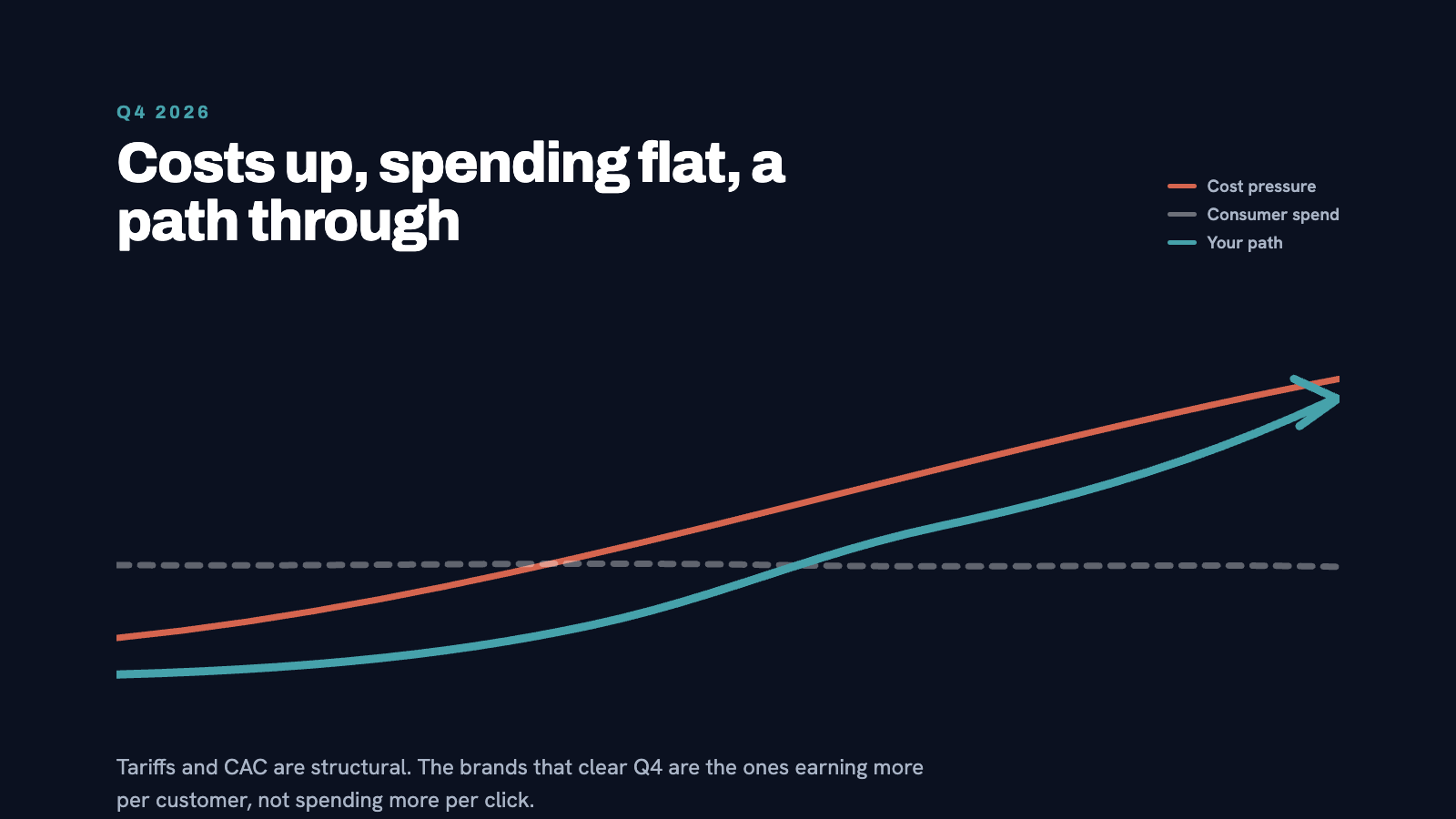
The 2026 DTC environment is operating under three simultaneous pressures: tariff-driven product cost increases, customer acquisition costs at or near all-time highs, and consumer spending that's softer than the last two years.
That's not a crisis. But it is a fundamentally different operating environment from the one most DTC brands built their playbooks for. The brands adjusting fastest are the ones gaining ground.
Survey data from 600+ DTC operators shows three primary adjustments brands are making for Q4:
Shifting budget toward owned channels. Email and SMS have no CPM. When paid acquisition costs are elevated and consumer spending is soft, owned channels deliver higher ROI on every dollar because they're reaching customers who already know and trust the brand. Brands shifting 10-15% of their paid budget toward list-building are protecting their Q4 margins.
Adjusting offer strategy. Aggressive discounting to drive volume in a low-margin environment is a race to the bottom. Brands finding the most success in 2026 are building value-add offers (bundles, gifts with purchase, early access) rather than leading with percentage discounts. These offers drive conversion without training customers to wait for sales.
Investing in retention infrastructure now. CAC will not decrease. Consumer spending will not improve dramatically in the next 90 days. The lever that's within a brand's control is what happens after the acquisition - repeat purchase rate, LTV, and the lifecycle infrastructure that drives both.
For brands sourcing product internationally, tariff-driven cost increases have compressed margins meaningfully in 2026. The math on Q4 profitability changes when your COGS have risen 15-30% while your selling price and consumer willingness-to-pay have stayed flat.
The margin compression makes the case for owned channels even stronger. A returned customer acquired for $0 (email or SMS campaign) generates the same margin as they would without the tariff impact. A new customer acquired at an elevated CAC with compressed COGS margins generates significantly less.
Brands with strong retention and high repeat purchase rates are more insulated from the tariff squeeze than those relying on continuous new customer acquisition.
Given the macro context, here's how we'd frame the Q4 strategy conversation:
• Protect your margins on BFCM by being thoughtful about discount depth. A 20% off versus 30% off decision matters more when your COGS are elevated.
• Shift list-building spend to Q3 to reduce your reliance on paid during BFCM's CPM peak.
• Prioritize retention flows over campaign frequency. Flows run at zero incremental cost per send.
• Focus acquisition on your highest-LTV customer segments, not your broadest audiences. The math on CAC is only survivable if LTV is sufficient.
Lorem ipsum dolor sit amet, consectetur adipiscing elit. Suspendisse varius enim in eros elementum tristique. Duis cursus, mi quis viverra ornare, eros dolor interdum nulla, ut commodo diam libero vitae erat. Aenean faucibus nibh et justo cursus id rutrum lorem imperdiet. Nunc ut sem vitae risus tristique posuere.How to Lower Customer Acquisition Cost for Ecommerce Brands in 2026
Lorem ipsum dolor sit amet, consectetur adipiscing elit. Suspendisse varius enim in eros elementum tristique. Duis cursus, mi quis viverra ornare, eros dolor interdum nulla, ut commodo diam libero vitae erat. Aenean faucibus nibh et justo cursus id rutrum lorem imperdiet. Nunc ut sem vitae risus tristique posuere.Customer Retention vs Acquisition: Why DTC Brands Need Both to Scale Profitably
Is your Q4 strategy built for the current environment?
Book your free growth diagnostic →