Paid Media Strategy
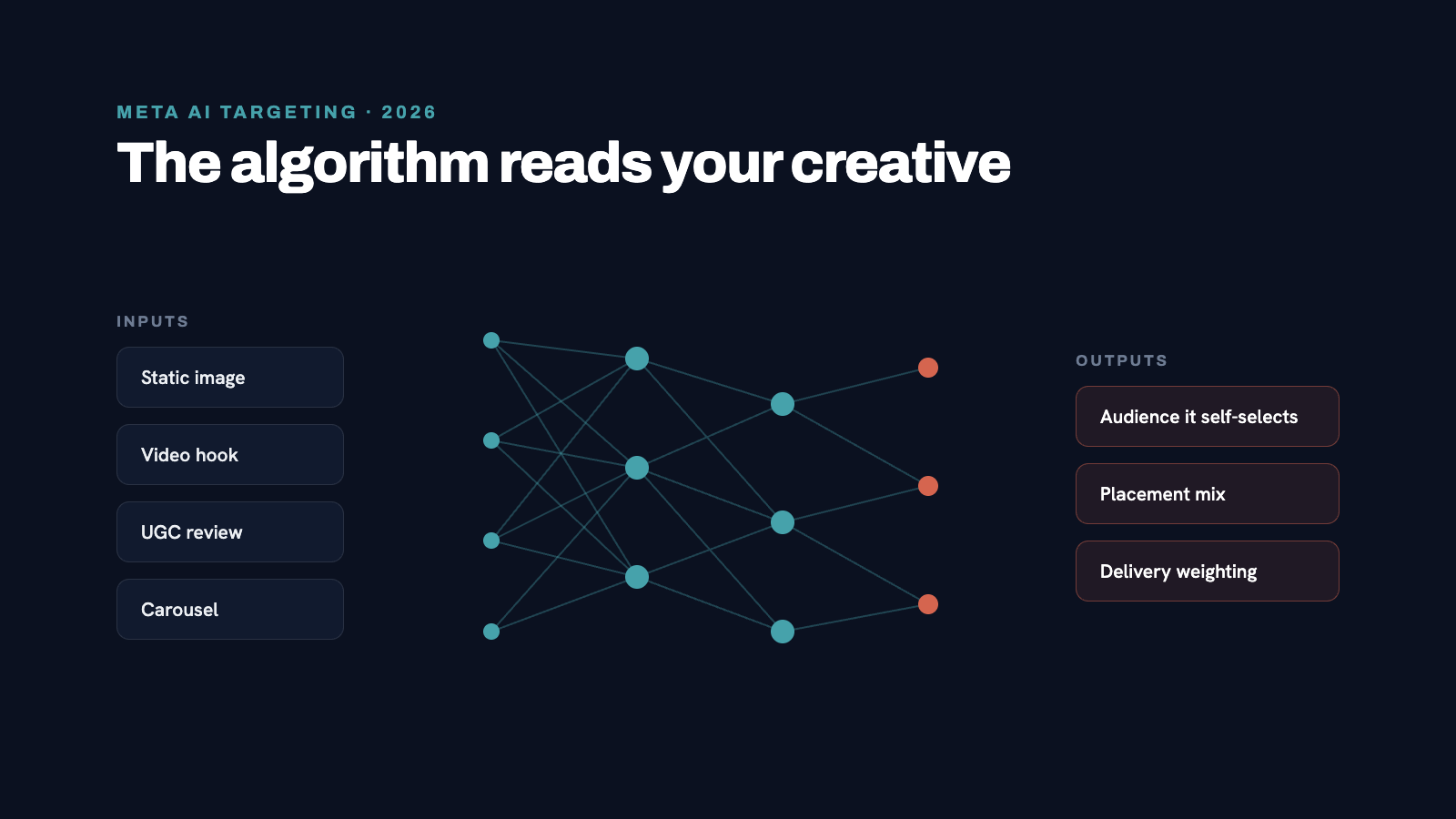
The Meta ad platform that DTC brands are running campaigns on in 2026 is functionally different from the one that existed two years ago. The changes aren't cosmetic - they affect how audiences are built, how creative gets distributed, and how performance is measured.
Brands still running the same account structure and targeting logic from 2023 are fighting the algorithm instead of working with it. Here's what actually changed, and what it means for your Q4.
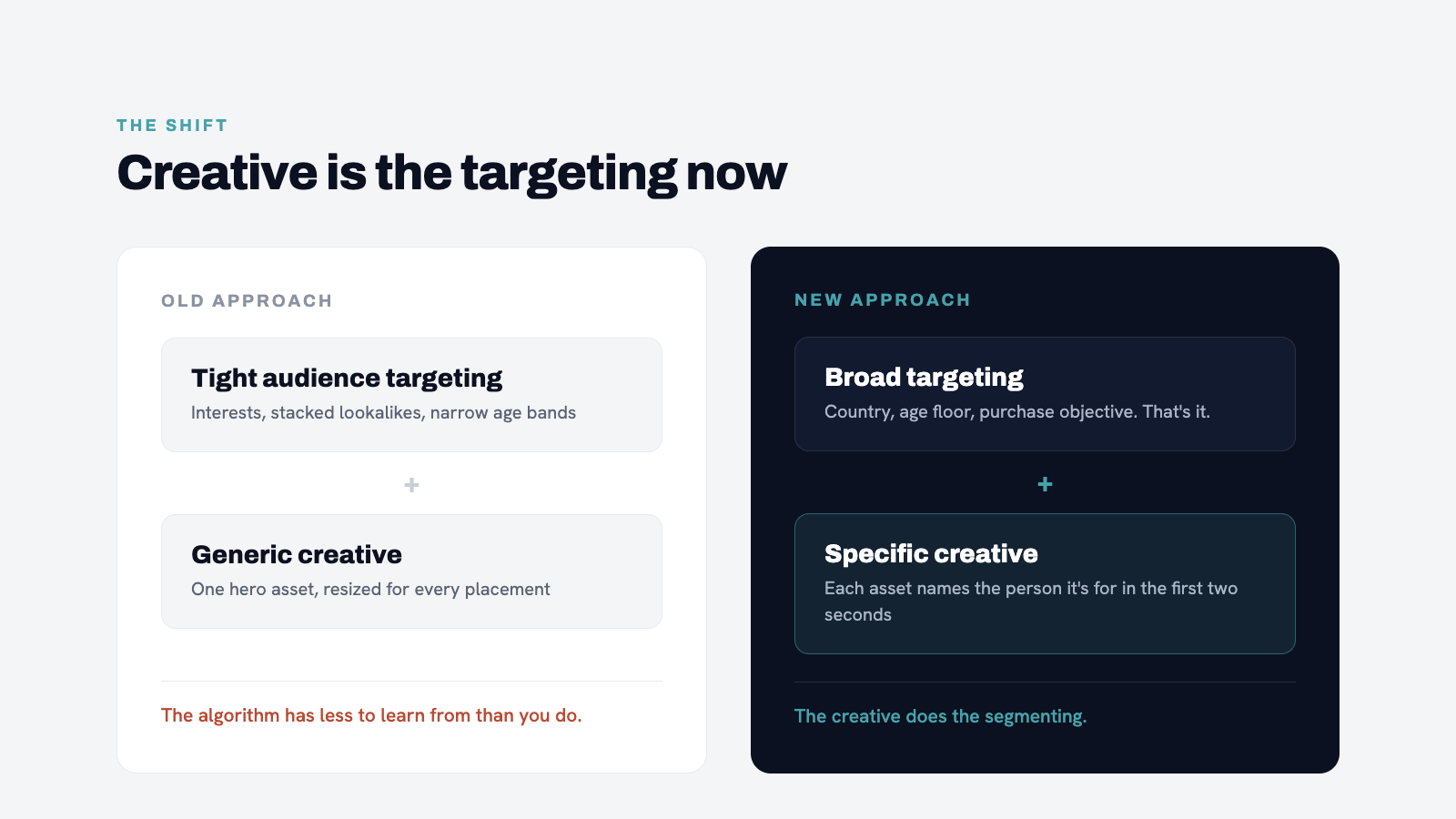
The most important change in Meta's algorithm is one that most brands still haven't fully internalized: your creative is now how your audience is identified, not just how they're convinced.
Meta's AI reads your ad creative - the visual content, the copy, the hook, the product shown - and uses that information to determine who sees it. Broad targeting is no longer about giving Meta permission to go anywhere. It's about giving Meta the right creative to find the right people.
The implication: detailed interest targeting and tight audience parameters are less powerful than they used to be. What's more powerful is creative that clearly signals the right customer through its content. A video showing a 45-year-old weekend golfer struggling with their iron game will find other 45-year-old weekend golfers better than an interest target of "golf" with a generic brand video.
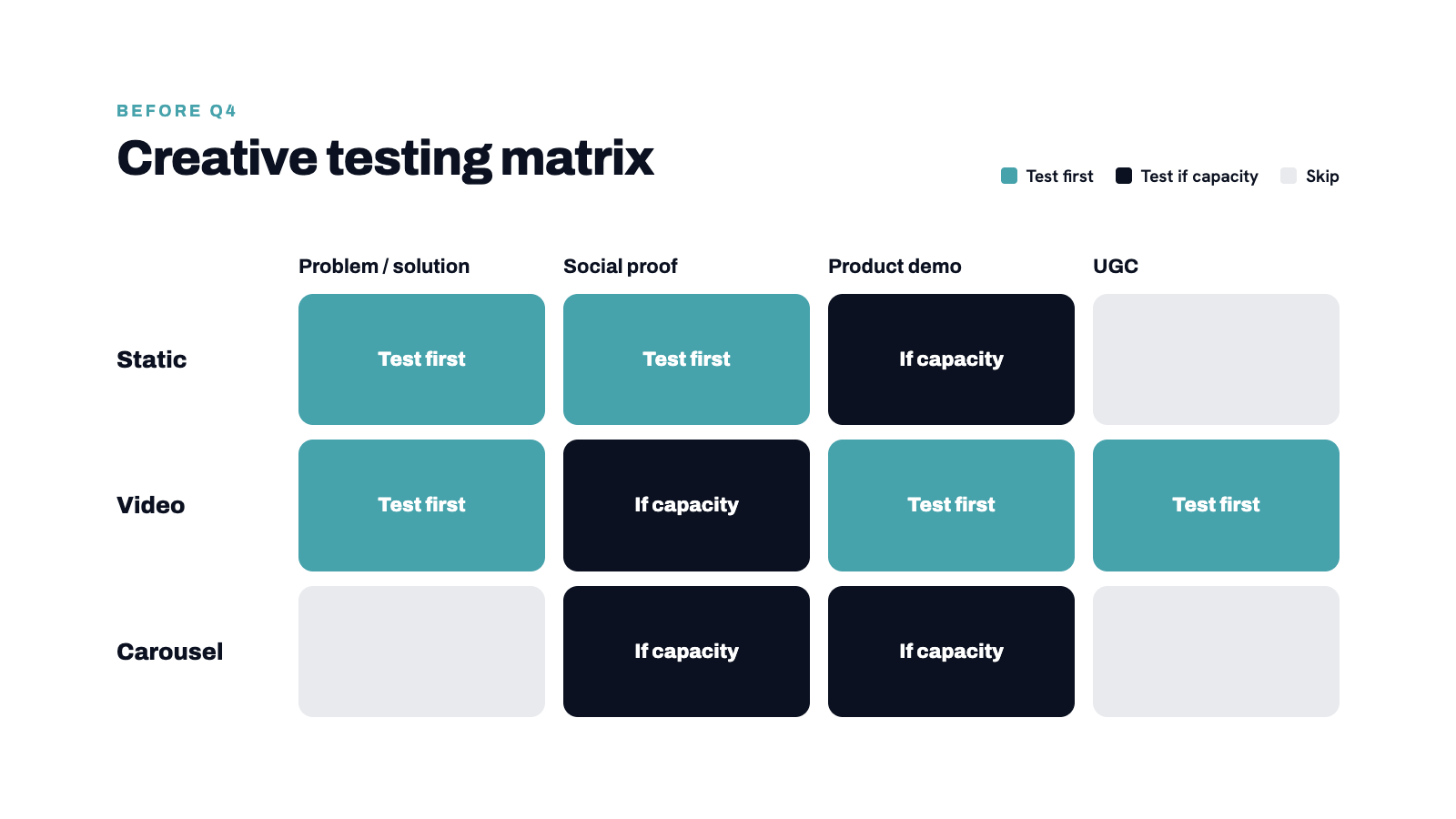
Build a creative testing system, not just test creative. You need a process for producing, rotating, and reading creative performance data consistently. Brands that test one or two new pieces of creative per month will be outpaced by brands running systematic creative programs.
Use Q3 to test incremental attribution. Meta has released its own incrementality measurement tools. Q3 - with its lower CPMs and lower stakes - is the ideal time to run these tests and understand the true lift effect of your campaigns before committing Q4 budgets.
Test Flex Ads before BFCM. Meta's Flex Ads format lets the algorithm test creative combinations automatically. A Q3 test against manually built ads will tell you whether it earns a spot in your BFCM plan.
Revisit new customer purchase optimization. Meta's built-in tool for prioritizing new buyers behaves differently depending on catalog size and purchase frequency. Know how it performs in your account before you need it during BFCM.
Platform-reported ROAS overstates actual performance by 15-40% for most DTC brands in 2026, due to iOS privacy changes, cross-device behavior, and attribution model limitations.
This means: don't scale Q4 budgets based on platform ROAS alone. Use blended MER - total revenue divided by total marketing spend - as your primary decision metric. Use platform ROAS to compare campaigns to each other. Use MER to decide whether the whole program is working.
Lorem ipsum dolor sit amet, consectetur adipiscing elit. Suspendisse varius enim in eros elementum tristique. Duis cursus, mi quis viverra ornare, eros dolor interdum nulla, ut commodo diam libero vitae erat. Aenean faucibus nibh et justo cursus id rutrum lorem imperdiet. Nunc ut sem vitae risus tristique posuere.Creative Is the New Targeting: How to Build a Meta Ad Creative System for Q4
Lorem ipsum dolor sit amet, consectetur adipiscing elit. Suspendisse varius enim in eros elementum tristique. Duis cursus, mi quis viverra ornare, eros dolor interdum nulla, ut commodo diam libero vitae erat. Aenean faucibus nibh et justo cursus id rutrum lorem imperdiet. Nunc ut sem vitae risus tristique posuere.How to Use Q3 to Test Your Way Into a Profitable Q4
Lorem ipsum dolor sit amet, consectetur adipiscing elit. Suspendisse varius enim in eros elementum tristique. Duis cursus, mi quis viverra ornare, eros dolor interdum nulla, ut commodo diam libero vitae erat. Aenean faucibus nibh et justo cursus id rutrum lorem imperdiet. Nunc ut sem vitae risus tristique posuere.What Is Marketing Efficiency Ratio (MER) - and Why Every DTC Brand Should Track It
Is your Meta account structure ready for Q4?
Book your free growth diagnostic →